There is a common belief in aviation that more flight time automatically means less risk. While experience generally makes a pilot safer, hours alone don’t create experience—what a pilot learns from those hours does.
A pilot with thousands of hours has likely encountered more weather, mechanical issues, unfamiliar airports, ATC challenges, and unexpected situations. Those experiences build a mental library that helps the pilot recognize potential problems before they become serious.
“Pilots benefit from continuing to challenge themselves rather than always choosing the easy, blue-sky flight. The key is to challenge yourself within a controlled environment—with a safety pilot whose skills and experience exceed what the flight demands. That allows you to build experience and judgment without unnecessarily exposing yourself to risk.”
— Don Medine, SF50 Flight Support LLC
Early in a pilot’s career, risk is often managed reactively: Something happens, and I respond.
With experience, risk management becomes proactive: What could go wrong, and what can I do now to prevent it?
That might mean carrying more fuel, delaying a flight, choosing a different route, diverting earlier, or deciding that a flight simply isn’t worth the risk.
The best pilots also learn from the experiences of others. Accident reports, incidents, other pilots’ mistakes, and lessons learned can provide valuable experience without having to personally experience the consequences.
Most importantly, experience should make a pilot more conservative, not complacent.
A newer pilot may ask, “Can I do this?”
An experienced pilot increasingly asks, “Should I do this?”
That distinction is at the heart of good aviation decision-making.
The goal isn’t to eliminate risk—aviation will never be risk-free. The goal is to recognize risk early, create margins, maintain options, and make good decisions before a situation becomes an emergency.
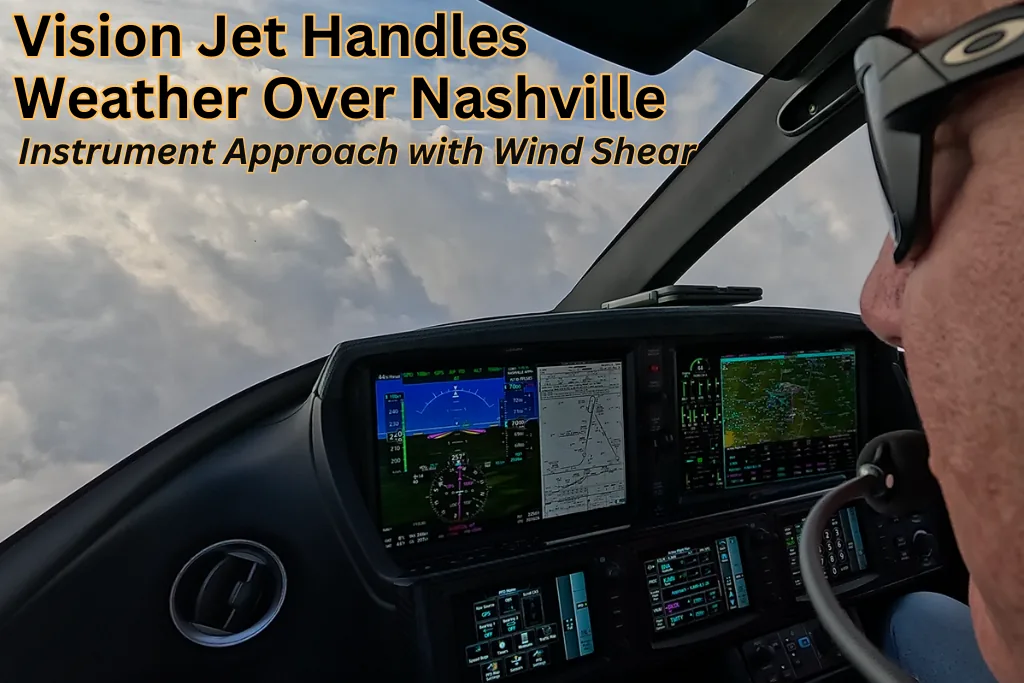
The benefit of the Cirrus Vision Jet and other modern aircraft is the tremendous safety technology available to pilots, including advanced avionics, weather radar, the CAPS parachute recovery system, Safe Return autoland, and other in-flight resources. However, pilots should never become overly reliant on technology—or even their own experience. Situations can develop in flight that exceed the capabilities of both the pilot and the aircraft. There is no substitute for thorough flight planning, disciplined preflight inspections, and sound aeronautical decision-making. The 3P process—Perceive, Process, and Perform—should be applied throughout all three phases of ADM: preflight, inflight, and postflight. Modern technology provides remarkable safety advantages, but good judgment and disciplined decision-making remain the pilot’s most important safety tools.
Flight time builds experience. Experience builds judgment. And good judgment is what ultimately reduces risk.