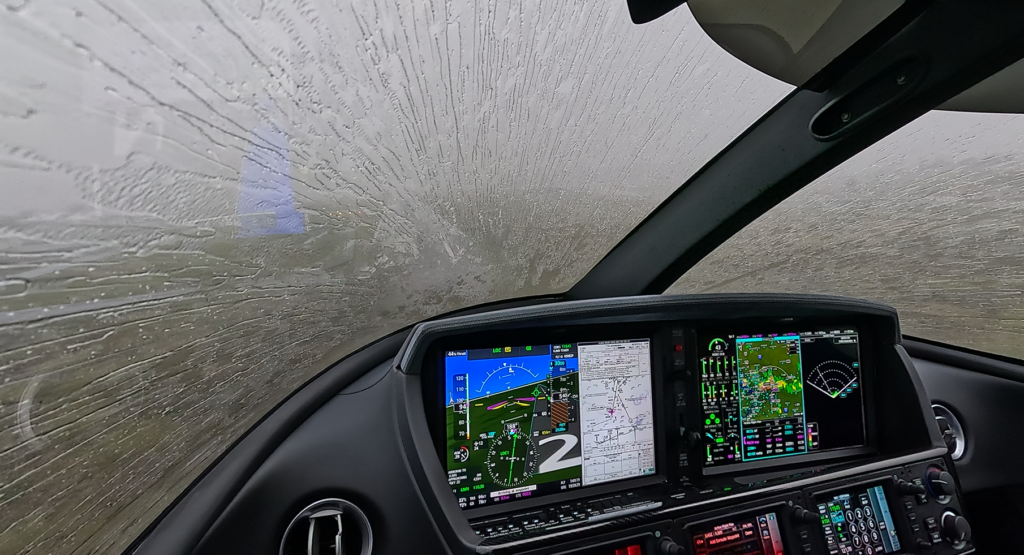
For many CEOs and entrepreneurs, becoming a pilot is about much more than learning to fly. It is about regaining control of one of the most valuable resources in business: time.
Conference calls, video meetings, and digital collaboration have transformed the way companies operate, but they have not eliminated the value of being there in person. There is still a unique synergy that comes from sitting across the table from a customer, meeting with a business partner, or working directly with a leadership team.
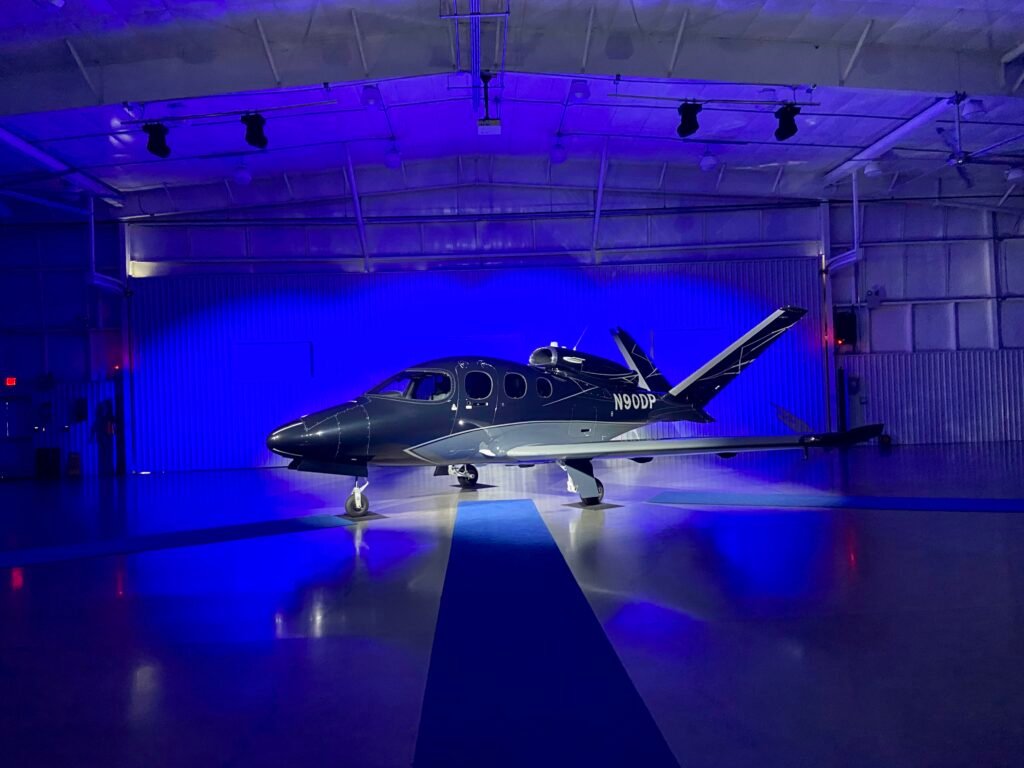
For entrepreneurs who routinely travel throughout a region, a Cirrus Vision Jet can offer a compelling combination of efficiency, practicality, and flexibility that traditional airline travel simply cannot match. Learn more about the Cirrus Vision Jet
Attracting and Retaining High-Caliber Talent
An aircraft can also become an unexpected advantage when it comes to recruiting and retaining exceptional talent. The advantage comes from how the company uses private aviation to help employees maintain a healthier work-life balance—not simply from the appeal of flying privately. High-caliber executives and professionals value their time, flexibility, and ability to remain present for both their careers and their families.
A well-planned business aviation program can reduce unnecessary travel days, eliminate long airline connections, and allow employees to attend important meetings and return home the same day. When a company invests in tools that make its people more productive while giving them greater control over their personal time, it sends a powerful message: we value what you bring to the organization, and we value your life outside of it. For companies competing for exceptional talent, that culture can be far more meaningful than the private jet itself.
The Problem With Airline Travel
Commercial aviation works exceptionally well when your destination is a major city with frequent nonstop service, but it becomes far less practical when your business takes you to local or regional airports.
But business travel often doesn’t work that way.
Your customer may be in a smaller market. A manufacturing facility may be located outside a major metropolitan area. A regional office may be near a general aviation airport rather than an airline hub.
That creates a familiar problem.
A trip that looks simple on a map can become an all-day event:
- Drive to a major airport
- Arrive well before departure
- Navigate security and terminal procedures
- Fly to a hub
- Connect to another flight
- Wait for luggage
- Rent a car or arrange ground transportation
- Drive to the final destination
- Repeat the process in reverse
And airline schedules ultimately dictate the itinerary.
- If the airline offers three flights a day, you plan around those three flights.
- If the only nonstop flight leaves at 7:00 a.m., you leave at 7:00 a.m.
- If your meeting ends at 2:00 p.m. but the next flight isn’t until 7:30 p.m., you wait.
For an executive whose time is worth hundreds or thousands of dollars an hour, those inefficiencies can become significant.
Regional Business Travel Is Where the Vision Jet Shines
The Cirrus Aircraft Vision Jet excels at regional business travel.
The SF50 combines the capabilities of a personal jet with the operational flexibility of a very light jet. It can access thousands of airports that scheduled airlines don’t serve, bringing owners substantially closer to their actual destinations.
That changes the equation.
Instead of asking:
“Which airport can the airline take me to?”
You can ask:
“Which airport is closest to where I actually need to be?”
For business owners, that distinction can be enormous. The Cirrus Vision Jet can utilize local, regional or international airports, reducing drive times and your ability be very strategic and efficient about business travel.
A regional trip that requires an airline connection and several hours of ground transportation may become a relatively straightforward Vision Jet flight.
Time Is the Real Advantage
The most compelling argument for aircraft ownership isn’t necessarily speed.
It is control — A Vision Jet allows an owner to determine when the trip begins, where it begins, and where it ends.
What if the business meeting moves from Tuesday morning to Monday afternoon, the aircraft can move with it.
When a customer is located 45 minutes from a small regional airport, there may be no reason to fly into a major hub an hour or two away.
If an executive needs to visit two or three cities in a single day, the ability to move directly between smaller airports can make an itinerary possible that would be difficult or impractical on the airlines.
That flexibility can translate directly into productive business time.
The Vision Jet Can Make Regional Business Travel Practical
Aircraft ownership isn’t appropriate for every business or every traveler. The economics depend on utilization, mission profile, location, operating costs, financing, insurance, maintenance, and many other factors.
But for an executive who regularly travels throughout a defined geographic region, the Vision Jet can be an unusually practical aircraft.
Its size is part of the appeal.
You don’t necessarily need a large flight department, a massive hangar, or a complicated operational structure to make a Vision Jet work. The aircraft is designed around simplicity and efficiency, while still providing the speed, altitude, comfort, and capability expected from a business jet.
For the right owner, that makes the transition from airline travel to private aviation considerably more approachable.
Why Do So Many CEOs Learn to Fly?
There is another reason successful entrepreneurs are drawn to aviation.
Piloting requires many of the same qualities that make a successful CEO.
Decision-making. Preparation. Risk management. Situational awareness. Discipline. Contingency planning.
Pilots are trained to anticipate problems before they become emergencies. They evaluate weather, fuel, aircraft performance, alternates, runway conditions, and changing circumstances before making a decision.
Business leaders operate in much the same way.
For many entrepreneurs, learning to fly also provides something increasingly rare in modern business: independence.
You are no longer completely dependent on someone else’s schedule.
That doesn’t mean every CEO needs to become a pilot. Professional pilots can provide tremendous value and are often the right solution for an owner.
But understanding the airplane and the operation gives an executive a much deeper appreciation for what private aviation can do for the business.
Entrepreneur and SF50 Flight Support, LLC CEO Don Medine understands the benefits of business travel firsthand.
“Conference calls and video meetings will never replace the synergy of being in front of a customer, or a business team. In addition, we should never undervalue taking control of business travel to enable you to achieve business goals, but still be able to maintain a life-work balance.”
That philosophy is at the center of the business case for private aviation.
The airplane isn’t the objective.
The objective is what the airplane allows you to accomplish.
Being able to attend the customer meeting rather than participate by video. Visiting a second location on the same trip. Getting home for an important family commitment. Turning a two-day trip into a same-day business visit.
Those are the real benefits.
Making the Transition to Private Aviation
The challenge for many prospective owners isn’t deciding whether they like the idea of a Vision Jet.
It’s figuring out how to make it work.
Which aircraft should you buy?
What model and configuration best fits your mission?
How much should you pay?
What should be evaluated during the acquisition?
Where should the aircraft be based?
Who will maintain it?
Who will fly it?
What does the insurance program look like?
How should trips be planned?
How much will the aircraft realistically cost to operate?
And perhaps most importantly:
Will owning a Vision Jet actually improve the way I travel?
Those are questions that should be answered before purchasing an aircraft—not after.
That’s Where SF50 Flight Support, LLC Can Help
SF50 Flight Support, LLC was created specifically to help Vision Jet owners and prospective owners navigate these decisions.
Our role begins well before the purchase — Through expert acquisition consulting, SF50 Flight Support, LLC can help prospective owners understand the aircraft market, evaluate potential acquisitions, identify important technical and operational considerations, and make informed decisions about whether a particular Vision Jet fits their mission. Learn more about our consulting capabilities.
But acquisition is only the beginning.
A successful aircraft ownership strategy requires operations planning.
That means developing a practical plan for how the aircraft will actually be used—pilot requirements, maintenance planning, scheduling, airport selection, trip planning, insurance considerations, and the many operational details that determine whether ownership becomes an asset or a burden.
Start With the Mission
The best place to begin isn’t with an airplane — It’s with your calendar. Look at the trips you made over the last 12 months.
- How often did an airline itinerary force you to make a connection?
- How many trips ended with a lengthy drive from the airport to your actual destination?
- How often did an overnight stay become necessary when the trip could otherwise have been completed in a single day?
- How much valuable time was lost waiting in terminals or between flights?
- How many potential business opportunities were constrained by the limited schedules and routes offered by commercial airlines?
Then consider what those trips would look like if you could depart from a convenient regional airport and fly directly to an airport near your destination.
That exercise often provides a much clearer picture of whether a Vision Jet makes sense.
Private Aviation Doesn’t Have to Be Complicated
For the right entrepreneur, the Cirrus Vision Jet can be more than a luxury purchase — it can be a business productivity tool.
It can provide access to more airports, greater scheduling flexibility, fewer connections, shorter ground transfers, and—perhaps most importantly—greater control over your time.
The key is approaching ownership strategically.
The right aircraft, operated correctly, can become an extension of the business itself.
SF50 Flight Support, LLC helps entrepreneurs and business leaders determine whether a Vision Jet is the right tool for their mission—and, if it is, helps them build a practical path from the idea of aircraft ownership to a successful operation.
Because the goal isn’t simply to own a jet. The goal is to make Vision Jet ownership work for you.
Let’s Connect
Whether you’re looking for a contract pilot, Supervised Operating Experience – SOE mentor, or long-term operational partner, SF50 Flight Support provides the reliability and expertise your Vision Jet deserves.
- 📍 Based in the Nashville area — supporting Vision Jet operations nationwide.
- 📧 Contact us today to discuss your upcoming flight needs.
- Call or text (615) 543-8553 or schedule a call.
- For more video content, check out our – YouTube channel.